My Favorite Mistake: Learning Without Blame in Business and Leadership
My Favorite Mistake is a podcast about learning without blame in business and leadership.
Despite the name, it’s not just my favorite mistake—it’s yours, it’s ours, and it’s what we can all learn from when things don’t go as planned.
Hosted by author and consultant Mark Graban, each episode features honest conversations with leaders, executives, entrepreneurs, and changemakers about a meaningful mistake they made—and what they learned after things went wrong. How they responded. How they improved. How they grew as leaders.
This isn’t a show about failure theater, gotcha moments, or simplistic “lessons learned.” It’s about how real people reflect, improve, and lead better in complex organizations—without scapegoating, shame, or hindsight bias.
What You’ll Hear
• Leadership and management mistakes that reshaped careers, teams, and organizations
• How teams and leaders learn without blaming individuals
• Insights about culture, systems, decision-making, and psychological safety
• Practical lessons drawn from real experience, not abstract theory
Guests come from business, healthcare, technology, sports, entertainment, government, and academia, sharing stories that reveal how learning actually happens.
The Perspective
Mark brings a systems-thinking lens grounded in Lean management, continuous improvement, and psychological safety. The focus is less on who messed up and more on what the system taught us.
Who This Podcast Is For
• Leaders and managers who want to learn from mistakes without blame
• Executives working to build healthier, more resilient cultures
• Professionals who believe improvement starts with reflection, not punishment
My Favorite Mistake: Learning Without Blame in Business and Leadership










Episodes

Sep 22, 2025
Sep 22, 2025
39 min
My guest for Episode #325 of the My Favorite Mistake podcast is Phillip Cantrell, EVP of Strategy at United Real Estate, founder of Benchmark Realty, and author of Failing My Way to Success: Lessons from 42 Years of Winning and Losing in Business.
EPISODE PAGE WITH VIDEO, TRANSCRIPT, AND MORE
Phillip reflects on more than four decades of entrepreneurial ups and downs across printing, real estate, and related ventures. He openly shares how devastating mistakes—including putting “all his eggs in one basket”—forced him to reinvent his approach. What looked like a catastrophe in 2007–2008 became the turning point that fueled Benchmark Realty’s rapid growth to nearly 2,000 agents.
“Failure is going to happen. If you don’t make mistakes, you’re not doing anything.”
In this conversation, Phillip and I talk about the difference between scaling vs. scrambling, the dangers of playing “not to lose” instead of “playing to win,” and why documenting processes is essential for growth. He also explains why your only real competitor is “the man in the mirror” and how daily reflection helps him learn from mistakes and avoid repeating them.
This episode is packed with timeless lessons on leadership, resilience, and learning from failure—whether you’re in real estate or any other industry.
“If you play not to lose in business, you’re already losing.”
Questions and Topics:
What’s your “favorite mistake” from your career?
How did putting “all your eggs in one basket” impact Benchmark Realty?
What did you learn from losing agents and clients during the mortgage crisis?
How did you develop the flat-fee brokerage model, and what risks did you see at the time?
Did you ever doubt whether that new model would work?
How did you rebuild Benchmark from five agents to nearly 2,000?
Why is it important to look outside your own industry for best practices?
What do you mean by the difference between scaling and scrambling?
How does documenting processes create better outcomes?
Why do you say your only real competitor is “the man in the mirror”?
What role has reflection and journaling played in your leadership growth?
What advice would you give younger entrepreneurs about learning from mistakes?

Sep 15, 2025
Sep 15, 2025
13 min
In this very special solo episode of My Favorite Mistake, Mark Graban breaks down the gloriously ridiculous — and surprisingly instructive — mistakes made by the characters in his all-time favorite film, This Is Spinal Tap.
With the long-awaited sequel, Spinal Tap II: The End Continues, now in theaters, Mark explores why Spinal Tap endures not just as a cult comedy classic, but as a brilliant satire of human behavior, team dysfunction, communication breakdowns, and leadership gone sideways.
And yes — these mistakes still matter, even four decades later.
From the Stonehenge measured in inches…To the foil-wrapped “courgette” in the pants…To the pod that wouldn’t open and the drummers who keep dying…
…these moments are funny because they’re true. And they’re great reminders that how we respond to mistakes matters more than pretending they never happened.
🔑 Topics & Highlights:
Why This Is Spinal Tap is more than just a comedy
The iconic “Stonehenge” prop mistake and what it teaches us about communication
How real-life rockstars refused to drum in the sequel (because of the “curse”)
Why remembering the courgette as a cucumber is itself… a mistake
The brilliance of “We don’t have time for that” and the backstage loop in Cleveland
Why doing what you’re told isn’t the same as doing what’s right
Mark’s personal story of seeing the film 100+ times — starting with a VHS in high school
🔗 Mentions & Links:
🎬 This Is Spinal Tap on IMDb
🎥 Spinal Tap II: The End Continues – Now in Theaters
📘 The Mistakes That Make Us by Mark Graban
💻 SpinalTarp.com – A curated list of character mistakes from the film
🎧 Subscribe & Follow:
If you enjoyed this episode, make sure to subscribe, leave a review, and check out past episodes of My Favorite Mistake — where we talk to leaders, authors, entrepreneurs, and creatives about the mistakes that made them who they are.
🎙️ Listen on Apple Podcasts, Spotify, or wherever you get your shows.

Sep 8, 2025
Sep 8, 2025
45 min
My guest for Episode #324 of the My Favorite Mistake podcast is Trevor Schade.
Episode page with video, transcript, and more
Trevor began his career as a Lean Six Sigma Black Belt with a strong background in coding and process improvement. He consulted on business efficiency and outsourcing before shifting into real estate in 2008. After earning his license, he quickly built a top-performing team of 26 agents with zero turnover over five years. By leveraging a virtual admin team in the Philippines and innovative automation, Trevor’s group generated over a million dollars in commissions.
In late 2023, Trevor stepped away from leading that large team to focus on investing, advising, and teaching. Today, he speaks on topics including negotiation, time freedom, and real estate strategy, and he has launched Life Wealth courses to help others pursue similar goals.
In this episode, Trevor shares his favorite mistake: jumping into a multi-level marketing business at age 19. The venture wasn’t financially successful, but it transformed his mindset. For the first time, Trevor developed a daily reading habit that exposed him to classics like Dale Carnegie’s How to Win Friends and Influence People and Robert Kiyosaki’s Rich Dad, Poor Dad. Those books gave him a foundation in psychology, leadership, and long-term thinking that continues to influence his work.
We also explore:
How lessons from Nebraska football and martial arts shaped Trevor’s resilience
What Lean Six Sigma taught him about efficiency, quality, and leadership
Why he focused on psychological safety and belonging to keep his team intact
How he used outsourcing and automation to scale without burnout
The importance of setting trajectories instead of rigid goals in business and life
Trevor’s story is a reminder that sometimes the most unprofitable ventures provide the richest education — if we’re willing to learn from them.
Questions and Topics:
What’s your favorite mistake?
How did joining a multi-level marketing company at 19 shape your growth, even if it wasn’t financially successful?
Did you ever think about leaving earlier, and was staying too long its own mistake?
What lessons did you take from Nebraska football and sports about resilience and bouncing back?
How did you first get into Lean Six Sigma and continuous improvement work?
In what ways did Lean and coding skills help you scale your real estate business?
What did you learn about leadership from running a 26-agent team with zero turnover?
How did you create a culture of psychological safety and belonging for your team?
Why do you emphasize inspiring people instead of “beating them over the head with metrics”?
What role have outsourcing and automation played in your business success?
You’ve said you set trajectories instead of rigid goals — what does that mean in practice?
Looking back, how do you connect these mistakes and lessons to your current focus on investing, advising, and teaching?

Aug 29, 2025
Aug 29, 2025
10 min
In this special episode of My Favorite Mistake, host Mark Graban celebrates the kickoff of football season with a unique perspective: five legendary kickers who know what it means to perform under pressure. Guests include former NFL kickers Jay Feely, Shane Graham, David Akers, Nick Lowry, and University of South Carolina’s all-time leading scorer Parker White.
These athletes share their most memorable mistakes and high-pressure moments—from Jay Feely’s infamous game-losing kicks and Saturday Night Live parody, to Shane Graham’s insight that failure and success are inseparable, to Nick Lowry’s persistence after 11 rejections before making the NFL. David Akers reflects on striving for improvement over perfection, while Parker White explains how practice and faith helped him overcome nerves and pass lessons on to the next generation.
Across their stories, a common theme emerges: mistakes don’t define you—they prepare you. By reframing failure, focusing on fundamentals, and staying mentally strong, these kickers transformed pressure into performance. Their lessons reach far beyond football, offering wisdom for leaders, teams, and anyone facing high-stakes challenges in business or life.
If you’ve ever struggled with fear of failure, performance anxiety, or the pressure to succeed, this episode offers practical, inspiring insights from athletes who’ve been tested in front of millions.

Aug 25, 2025
Aug 25, 2025
53 min
My guest for Episode #323 of the My Favorite Mistake podcast is Grace Bourke, Consulting Director of the Performance Excellence Practice at Baker Tilly. With nearly 40 years of experience in healthcare quality improvement and industrial engineering, Grace has worked in clinical care, biotech, global public health, and senior leadership roles at organizations including Kaiser Permanente and Sutter Health.
Episode page
Grace shares a very personal favorite mistake — the challenges of building a new home that turned into a nightmare of mold, leaks, and structural flaws. What began as a house problem quickly became a more profound lesson in trust, verification, and speaking up — themes that resonate far beyond construction and directly into the world of healthcare.
“Trust and verify becomes trust and vigilant, educated verification.” – Grace Bourke
She reflects on how her tendency to trust inspections and processes, while ignoring her own instincts, parallels what often happens in healthcare systems when leaders or staff don’t feel psychologically safe to raise concerns. Grace connects her experience to the importance of leadership accountability, patient safety, and continuous improvement, noting that healthcare still struggles to admit mistakes and act decisively to prevent harm.
We also talk about the role of psychological safety, second opinions, and lifelong learning, both in our personal lives and in healthcare. Grace shares how hobbies like glass fusing remind her that safe spaces for experimentation and “planned mistakes” can strengthen resilience, creativity, and growth.
“We can’t fix the whole world, but we can fix our small piece — and that makes a difference.” – Grace Bourke
Questions and Topics:
What’s your favorite mistake?
Was the mistake choosing this builder, or not verifying inspections before closing?
Why do you think you didn’t speak up more during the building process?
How does this experience connect to psychological safety in healthcare?
What have you learned about yourself from going through this?
How do you put the house problems into perspective?
Has the builder taken responsibility or apologized?
What parallels do you see between this home-building experience and healthcare improvement?
Why is it so hard for healthcare organizations to admit mistakes?
What role does leadership play in creating safer systems?
How do hobbies like glass fusing help you practice learning from mistakes?
What do you mean by “the mistake you’re planning”?
What gives you hope for improvement in healthcare, despite the challenges?

Aug 18, 2025
Aug 18, 2025
43 min
My guest for Episode #322 of the My Favorite Mistake podcast is Rob Dorgan, a multi-talented professional whose career path has taken him from paralegal to college professor, retail store owner, manufacturing company president, and now licensed massage therapist, certified yoga educator, meditation teacher, and astrologer. Rob is also the author of Awakening the Mystic: A Novel of Cosmic Love and Healing.
Episode page with video and more
His favorite mistake? Taking what was meant to be a short trip to Europe while working on his PhD — a journey that led him to never return to that academic track. Instead, it opened his eyes to a different pace of life, sparked a reassessment of what success meant to him, and ultimately set him on a more balanced and meaningful career path.
In our conversation, Rob shares how that decision — which family and friends initially questioned — allowed him to escape burnout and embrace a life and career that integrates his passions for teaching, creativity, and well-being. He reflects on lessons learned from his “type A” years in academia and business, the importance of slowing down, and how yoga, meditation, and practical stress relief can improve both personal health and workplace culture. We also discuss his experience bringing these tools into corporate environments, where employees not only benefit individually but also feel more supported by their organizations.
“Stress comes on so slowly that it becomes your normal — and you forget what life without it feels like.”
That realization, Rob says, is what helped him see the deeper value of meditation and mindful living. We also talk about his book’s concepts — from the “five kleshas” in yoga philosophy to the idea of an “inner council” — and how self-awareness can help us navigate life’s choices. Whether you’re navigating a career change, seeking better work-life balance, or simply curious about practical ways to reduce stress, Rob’s story offers valuable insights and inspiration.
Questions and Topics:
What’s your favorite mistake?
How did your trip to Europe during your PhD studies change your career path?
Did you consider moving to Europe to teach in that more relaxed environment?
What countries did you visit on that trip?
How did you go from teaching to starting a retail store and then leading a manufacturing company?
Did yoga and meditation help you become a better leader?
How did your personal stress experiences influence how you led the company?
How have attitudes toward workplace stress changed since the 1990s?
How do you make meditation and stress relief practical for corporate settings?
How do companies usually find and bring you in for corporate sessions?
What types of people attend your retreats, and what do they take away?
How did you personally discover the benefits of a consistent yoga practice?
How can yoga and meditation help with stress-related physical issues?
What are the “five kleshas” in yoga philosophy?
How do those concepts connect to ego, attachment, and fear?
What is the “inner council” in your book, and how does it work?
How did your interest in astrology begin?
How can knowing your “council leader” help you in life and work?
How did you balance the drive to finish your book with avoiding stress?
What’s your advice for building habits like meditation or yoga into daily life?

Aug 11, 2025
Aug 11, 2025
42 min
My guest for Episode #321 of the My Favorite Mistake podcast is Cynthia Kane, founder and CEO of the Kane Intentional Communication Institute and author of several books, including How to Communicate Like a Buddhist and The Pause: How to Keep Your Cool in Tough Situations.
Episode page with video and more
Cynthia shares a pivotal mistake from early in her life: letting other people’s opinions matter more than her own—especially after a college professor told her she’d never be a good writer. That moment stung, but it also eventually propelled her toward a path of mindfulness, self-trust, and transformational communication.
Cynthia explains how her journey through loss, meditation, and Buddhist principles helped her develop a more intentional way of communicating—not just with others, but with herself. We explore how mistakes, reactivity, and emotional attachment can all be reframed through mindfulness and self-awareness. Cynthia offers practical tools for staying calm during high-stakes conversations, including pausing, resetting the nervous system, and learning to speak from an “empty place”—a state of clarity without judgment or reactivity.
“Every mistake leads us to something better.”
Throughout the conversation, we also unpack the difference between being nice and being kind, how communication impacts stress levels, and why helpful language is honest, kind, and necessary. Cynthia’s insights are especially valuable for leaders, teams, and anyone who wants to communicate more effectively under pressure. As she says, “Every mistake leads us to something better.”
Questions and Topics:
What’s your favorite mistake?
When did you realize that listening to others more than yourself had become a pattern?
How did the loss of your first love influence your journey of self-awareness and healing?
What led you to start writing again after being discouraged?
What is creative nonfiction, and how does it differ from other forms of writing?
Did working with an editor bring up old doubts, and how did you manage that feedback process?
How does Buddhism shape your view on mistakes?
Does that mindset help you approach writing mistakes differently?
How do you balance detachment from mistakes with still caring about your work?
What does “communicating like a Buddhist” mean in everyday life?
Can you give examples where helpful vs. hurtful language is more subtle?
What’s the difference between being nice and being kind?
How does changing our communication style help reduce stress?
What inspired your newest book, The Pause?
What’s an example of a workplace situation where not pausing leads to regret?
What should someone do if they need a pause but the other person won’t allow it?
How can we calm ourselves in the moment to respond more intentionally?
What does it mean to respond from an “empty place”?
What breathing techniques do you recommend in tough conversations?

Aug 7, 2025
Aug 7, 2025
11 min
🎙️ In this bonus episode of My Favorite Mistake, Mark Graban welcomes back Dr. Jen Heemstra, Charles Allen Thomas Professor and Chair of Chemistry at Washington University in St. Louis. Jen joins us to talk about her new book, Lab Work to Leadership: A Concise Guide to Thriving in the Science Job You Weren’t Trained For.
She shares how the book was inspired by her favorite mistake—realizing that a research career in science unexpectedly came with a leadership role she wasn’t trained for. What began as a personal challenge turned into a passion for mentorship and a practical guide to help others in the sciences (and beyond) succeed as “accidental leaders.”
👉 Learn how Jen approached this transition, what others in academia and technical fields can take away, and why leadership training is essential—even if it’s not part of your job description (yet).
🧪 “People are counting on you to get this leadership thing right.” – Jen Heemstra
🔁 Listen to Jen’s original episode (#262) where she shares her favorite mistake:http://markgraban.com/mistake262
🎧 Listen to all episodes at https://www.markgraban.com/mistake

Aug 4, 2025
Aug 4, 2025
43 min
My guest for Episode #320 of the My Favorite Mistake podcast is Damon Lembi, CEO of Learnit, a live learning and development platform that has helped upskill over 2 million professionals.
Episode page with video, transcript, and more
A former college baseball player and now a two-time bestselling author, Damon shares the story of how youthful ambition and overconfidence led him to push Learnit into a rapid, unsustainable expansion during the dot-com boom. Despite his father’s cautious advice, Damon got his way—and then faced the harsh reality of a collapsing market and near bankruptcy.
In our conversation, Damon reflects on the hard-earned lessons from that pivotal mistake, including the dangers of comparing yourself to others, the importance of thinking through worst-case scenarios (what he now calls “purposeful awfulizing”), and the humility required to be a “Learn It All” leader. His resilience and willingness to grow through adversity helped him guide Learnit not only through the early 2000s tech crash, but also through the 2008 recession and beyond.
“If you’re always right, you’re not listening hard enough.”
Damon shares how his background as a competitive athlete shaped his mindset around failure, feedback, and agility—traits that now inform how he builds his team and company culture. We also talk about his podcast, The Learn It All Podcast, where he continues learning from top authors, leaders, and changemakers. Damon’s story is a powerful reminder that mistakes can be an expensive—but invaluable—education.
“Make new mistakes, learn from them, and move forward.”
Questions and Topics:
What’s your favorite mistake?
How did you go from playing baseball to becoming CEO of Learnit?
What lessons did you take from your baseball career into business?
Did you ever regret turning down the chance to play minor league baseball?
Was anyone cautioning you against overexpanding Learnit?
What did you learn from that experience as a young CEO?
How did you apply those lessons during the 2008 recession?
How has your leadership style evolved since then?
What does “being a Learn It All” mean to you?
What kind of people do you look to hire and why?
How do you balance vulnerability and confidence as a leader?
What did you learn about receiving feedback from your time in sports?
How do you avoid letting one failure affect your next decision or meeting?
What’s the difference between failure and a mistake?
Can you share more about your Learn It All podcast and what you’ve gained from it?

Jul 28, 2025
Jul 28, 2025
44 min
My guest for Episode #319 of the My Favorite Mistake podcast is Sapna Pieroux, award-winning author of Let’s Get Visible!, a branding consultant, and the founder of Inner Visions ID.
Episode page with video, transcript, and more
With a background spanning 20 years in media and experience working with major brands like Toyota, Sony, and L’Oréal, Sapna shares the defining mistake that led her to a new level of impact: believing that her great work alone would speak for itself. Early in her entrepreneurial journey, she hid behind a company logo and resisted putting herself out there—fearing criticism, judgment, and even considering a pseudonym for her book.
In this honest and inspiring conversation, Sapna shares how she overcame those fears and the societal pressures—especially those that affect women and people of color—to stay small or silent. Through her own evolution, she discovered the power of personal branding and visibility, not just for business growth but for personal confidence. She now helps leaders and teams align their business and personal brands so they can show up with clarity, confidence, and credibility in a noisy world.
We also explore common branding mistakes—like trying to DIY logos without strategy—and how Sapna’s signature “Do-Say-See” model helps entrepreneurs and professionals build trust and influence. Whether you're just starting out or trying to get unstuck, Sapna’s insights on visibility, imposter syndrome, and brand alignment will give you practical tools and thoughtful encouragement.
Questions and Topics:
Is branding more about how others see you—like a nickname—than what you say about yourself?
What was your favorite mistake?
How was hiding behind your logo hurting your business?
How close were you to publishing your book under a pseudonym?
Was your publisher encouraging you to publish under your real name?
What do you now teach others about personal branding as a result of that mistake?
Why do you think many women hesitate to talk about their accomplishments?
How did red become such a key part of your brand?
What are some early steps someone can take to build their personal brand if they’re nervous about putting themselves out there?
What gave you more confidence to show up consistently?
How did entering awards help you boost your visibility and credibility?
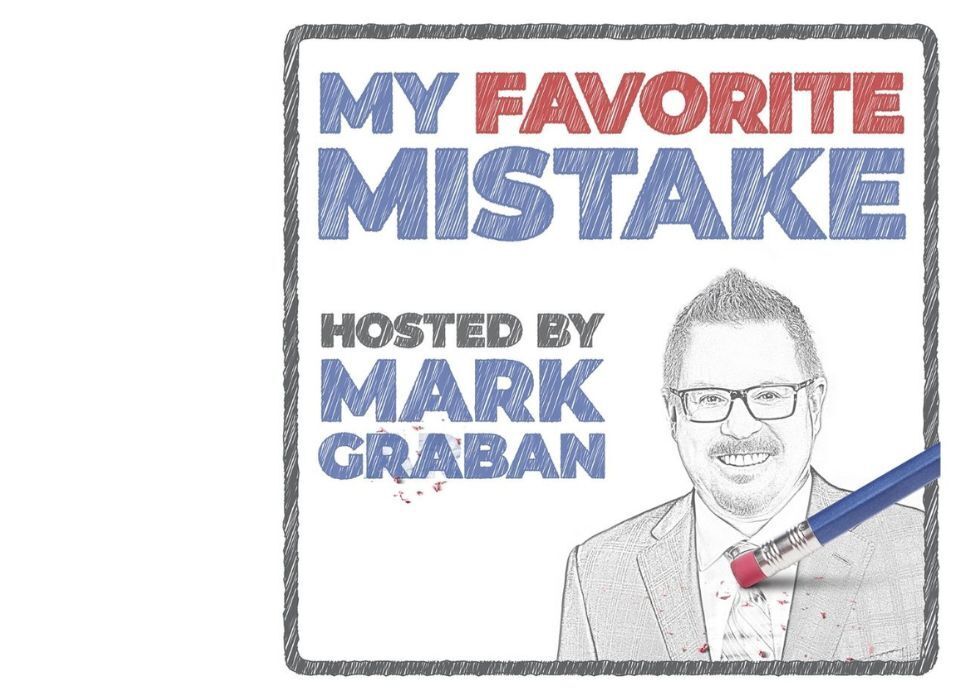
About Mark Graban
Mark Graban is an author, speaker, and consultant, whose latest book, The Mistakes That Make Us: Cultivating a Culture of Learning and Innovation, is available now.
He is also the author of the award-winning book Lean Hospitals: Improving Quality, Patient Safety, and Employee Engagement and others, including Measures of Success: React Less, Lead Better, Improve More.
He serves as a consultant through his company, Constancy, Inc, and is also a Senior Advisor for the technology company KaiNexus.
Mark hosts podcasts, including “Lean Blog Interviews” and “My Favorite Mistake.”
Education: B.S. in Industrial Engineering from Northwestern University; M.S. in Mechanical Engineering, and M.B.A. from the Massachusetts Institute of Technology’s Leaders for Global Operations Program.