My Favorite Mistake: Learning Without Blame in Business and Leadership
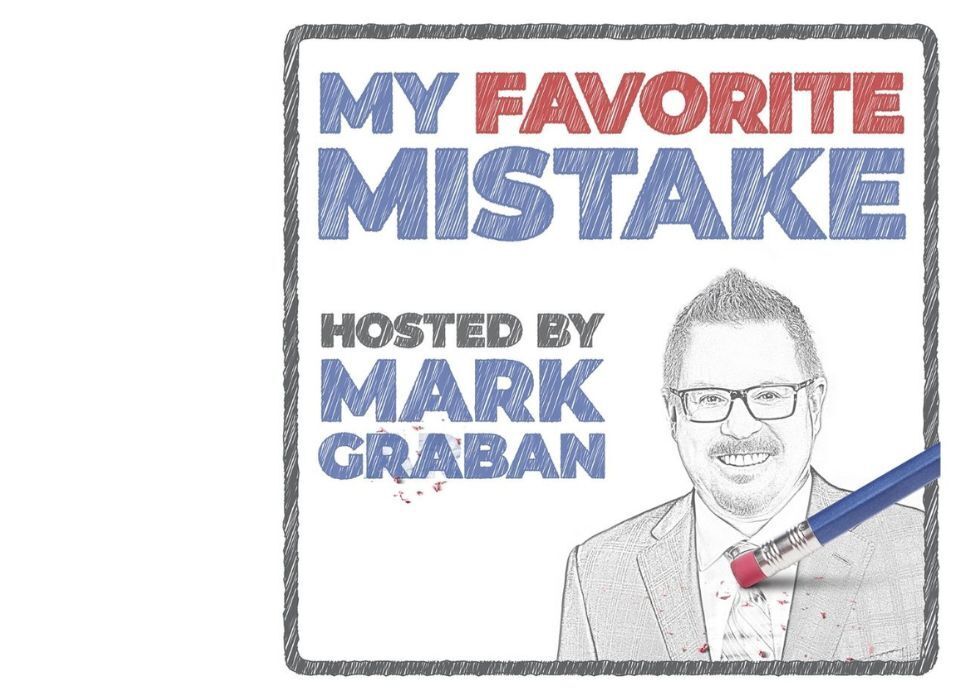
My Favorite Mistake is a podcast about learning without blame in business and leadership.
Despite the name, it’s not just my favorite mistake—it’s yours, it’s ours, and it’s what we can all learn from when things don’t go as planned.
Hosted by author and consultant Mark Graban, each episode features honest conversations with leaders, executives, entrepreneurs, and changemakers about a meaningful mistake they made—and what they learned after things went wrong. How they responded. How they improved. How they grew as leaders.
This isn’t a show about failure theater, gotcha moments, or simplistic “lessons learned.” It’s about how real people reflect, improve, and lead better in complex organizations—without scapegoating, shame, or hindsight bias.
What You’ll Hear
• Leadership and management mistakes that reshaped careers, teams, and organizations
• How teams and leaders learn without blaming individuals
• Insights about culture, systems, decision-making, and psychological safety
• Practical lessons drawn from real experience, not abstract theory
Guests come from business, healthcare, technology, sports, entertainment, government, and academia, sharing stories that reveal how learning actually happens.
The Perspective
Mark brings a systems-thinking lens grounded in Lean management, continuous improvement, and psychological safety. The focus is less on who messed up and more on what the system taught us.
Who This Podcast Is For
• Leaders and managers who want to learn from mistakes without blame
• Executives working to build healthier, more resilient cultures
• Professionals who believe improvement starts with reflection, not punishment
My Favorite Mistake: Learning Without Blame in Business and Leadership









Episodes

7 days ago
7 days ago
41 min
In 2016, CPA Tyler McBroom had a call on the calendar to discuss partnering with Tony Robbins’ accounting alliance. It was set for 10:30 PM his time, because the other side was in Australia. The day before, Tyler and his father decided that was too late and asked to move it inside business hours. The reply was “Sure, no problem.” Then nothing, for three years.
Tyler, now CEO of TRM CPA and author of Cash Flow and Grow, explains what that request taught him about how he treated a rare opportunity. He describes why he kept following up every month with evidence of progress, and what he concluded about whether a four-person firm was ready for the growth it was chasing.
We also talk about how changing when his firm got paid, not what it charged, nearly eliminated accounts receivable and raised sales conversion. Tyler explains why big price increases lose fewer clients than owners fear, how he kept a social media bet alive through nine months of zero clients, and what his firm’s “grin test” for deductions is.
For leaders, the lesson is practical. When an opportunity that size knocks, don’t ask it to work around your schedule. And build the capacity to handle what you’re asking for before it arrives.
Episode page, full transcript, and show notes
Follow My Favorite Mistake in your podcast app, and leave a rating or review if this episode was useful.

Oct 12, 2026
Oct 12, 2026
43 min
Grant Harris teaches leaders to fix the process, not the people. Then he created the friction he helps clients remove, and it cost him a speaking deal.
A cold inbound lead arrived in his LinkedIn inbox: an association with budget approved, a president who had seen him on LinkedIn and wanted him, and a fee close to what he hoped for. Instead of accepting the offer, he proposed a leadership session and extras before and after the talk. The planner had to go back with new questions, review a second proposal, and reopen a budget that was already approved. He was not selected, and he says rightfully so.
Grant is the founder and president of GTH Consulting, a Certified Diversity Executive, and a speaker and consultant on what he calls human-centered performance. He explains why he did not ask “why not me,” how he debriefs a lost deal instead, and where showing value belongs: in discovery questions up front and in the conversation after a successful engagement.
We also get into what he calls accurate accountability. When the same problem shows up with different people under the same conditions, stop blaming the person and inspect the process. It is not automatically the leader’s fault either. He offers one question to replace “Sally messed up”: what part of the process made this outcome possible? He covers where process friction hides, why retraining alone rarely fixes it, and how a late autism diagnosis shaped his view of capable people mislabeled as rigid, aloof, or disengaged.
Show notes, transcript, and links: https://markgraban.com/mistake370
If this episode is useful, follow My Favorite Mistake and leave a review wherever you listen.

Oct 5, 2026
Oct 5, 2026
40 min
Her attorney and accountant told her not to buy the dental practice, then quit when she did. The appraisal came in at about 5% of the asking price.
Dr. Jen Moran, an AACD board-certified restorative dentist, founded Water Tower Dental Care in Chicago in 1997. She did it by buying a practice that ran on the lowest tier of dental insurance and barely broke even. The appraisal gave the practice's goodwill zero value. What she saw instead were happy patients from major Chicago employers and a highly skilled hygienist. Over several years, she worked with those employers' HR teams to move patients to fee-for-service care. Her parents had co-signed the lease, which put their house on the line.
Her second mistake was an impulsive purchase of an early same-day crown machine. She placed about 50 restorations with it and didn't trust the results. She sold the machine back at a 50% loss and redid every restoration at no charge.
For leaders, the episode raises two questions. What does your accounting miss about the value of your people? And what does it take to own a mistake in front of your customers? We also talk about the business coach who taught her to share profits with her team, private equity in dentistry, and how to use a sonic toothbrush correctly.
Episode page and full transcript: https://markgraban.com/mistake369
Follow My Favorite Mistake wherever you listen, and leave a review if this episode was useful.

Sep 28, 2026
Sep 28, 2026
43 min
Eric Dingler and his wife met every week to review the numbers in their business. When they moved to Costa Rica, they paused that meeting for what was supposed to be six weeks. The pause lasted a year. Losing a client led to a short draw on a line of credit, then another, then one that never got repaid. Embarrassed, Eric kept it to himself until he could present a plan to fix it, and in a panic he launched a string of new offers. By the time he told his wife, he had run through the line of credit and two credit cards.
Eric is a business coach, owner of the agency In Transit Studios, and author of Hire to Grow. He ran two businesses remotely for three years while his family traveled full time through 20 countries.
We talk about why people hide bad news even from someone who has never given them a reason to fear the reaction, and Eric's explanation that the silence comes from a need for significance, acceptance, and security. Leaders who want their people to raise problems early will recognize the same pattern from the other side. We also cover the difference between training and developing a team, hiring before you feel ready, his commitment that no one on his team will lose their job to AI, and why an honest time audit is the first step for an owner who suspects they're the bottleneck.
Full show notes and transcript: https://markgraban.com/mistake368
If the show is useful to you, please follow and leave a review.

Sep 21, 2026
Sep 21, 2026
37 min
Stephanie Mitchell came back from vacation and got called into the C-suite. They wanted her to run the hospital laboratory temporarily. She was an ICU nurse who had moved into administration, she knew nothing about lab work, and consultants were arriving to cut costs. She took the job and asked to be let out of it as soon as possible.
Four months in, working night and day while lab staff wondered what a nurse was doing there, she thought she had made a mistake in saying yes. What changed was learning what the work actually was. She had assumed lab staff sat waiting for her phone calls as a nurse. They did not. By the end of the assignment she wanted to stay and fix the processes she finally understood, so she asked to interview for the permanent job she had been trying to escape. She retired from that lab 20 years later.
Stephanie retired as Director of Lean Process Improvement and Laboratory Services at Riverside Medical Center in Kankakee, Illinois. In this conversation with host Mark Graban, who worked with her as a Johnson & Johnson consultant 20 years ago, she explains what separates real cost reduction from telling a department to cut 10 percent and figure it out, why a written no-layoff commitment made improvement possible, how faster test turnaround times helped the hospital avoid building an emergency department expansion, and the five separate checks the blood bank built so no single human error could give a patient the wrong unit of blood.
If you lead people whose work you could not do yourself, this one is for you.
Full episode page: https://markgraban.com/mistake367
Follow the show and leave a rating or review wherever you listen.

Sep 14, 2026
Sep 14, 2026
39 min
Dr. Jonathan Thorp spent a career building systems, methods, and models that made work more functional. His mistake was assuming that creating the value was where the work stopped. Promoting it struck him as vanity, the opposite of humility, so he avoided doing it. Then he watched good work land as a non-event, including an incentive plan he redesigned for a client services group after finding the levers were connected to the wrong things. Results improved. People credited a lucky run of customer calls until someone explained what had actually changed. His reframe now is that promotion is the servant of mission, and that translating value is part of the work rather than an afterthought.
That matters for any leader whose improvements get made and then quietly ignored. If nobody knows what you changed, they will attribute the result to something else.
Jonathan is CEO of Quantum Connections in Dallas, a Naval Academy graduate in ocean engineering who spent 24 years as a naval aviator, and a former VP of organizational development at JPMorgan Chase. He has taught leadership and decision making at the Naval War College since 2010.
We also cover the Quantum Connections 2026 American Dialogue Report, which found that 85 percent of Americans avoided at least one difficult conversation in the past 30 days, what naval aviation debriefs teach about candor, and why declaring psychological safety without evidence backfires.
Episode page, show notes, and full transcript: https://markgraban.com/mistake366
Follow the show and leave a rating if this one was useful.

Sep 8, 2026
Sep 8, 2026
39 min
Susan von Seggern handed the finances to her business partner and stopped looking at them. Then she decided their Los Angeles PR agency should open a New York office -- a lease, three hires, salaries, insurance, payroll taxes -- without opening the books first. Her partner pushed back. Susan says she didn't listen.
Then the dot-com crash hit, then the 9/11 recession, and PR budgets disappeared. A forensic accountant looked at the books and told them what they had to bring in each month to keep going. They weren't close. Susan took a home equity loan against the condo she had bought in her twenties to cover final paychecks, handed off the New York lease, and closed the office. People lost jobs in both cities.
The leadership question here isn't about accounting. It's about what happens when you delegate a function and quietly delegate your attention along with it, and what it takes to hear a partner who is telling you something you don't want to hear. Susan is a Los Angeles PR consultant with more than two decades in the field, starting as a major label publicist working with artists including Wu-Tang Clan, Public Enemy, Elton John, and Ice Cube. She and her former business partner are still close friends, which she credits to how deliberately they both tried to do right by people on the way down.
We also get into earned media, why lead time is the thing clients underestimate most, and her three years doing PR for one of the world's largest online gambling companies.
Full episode page: https://markgraban.com/mistake365
If you find the show useful, follow it in your app and leave a review.

Aug 31, 2026
Aug 31, 2026
41 min
Steve Montague had been flying for the airline about two years when he decided to let his captain be wrong.
He was paired with a captain who shut him down every time he offered anything. Asked about routing around a thunderstorm 80 miles out, the captain told him he would say when he had made a decision. Told that maintenance had been called for a burned-out light, which federal regulation required, the captain told him to ask permission next time. On their third trip together that month, descending into Albuquerque, Montague watched the airspeed sit at 300 knots below 10,000 feet, where the limit is 250. He saw it. He said nothing.
The captain caught it himself. Nothing bad happened. But Montague calls it the least proud professional moment of his career, and it still bothers him decades later. What bothered him was not the chewing out. It was that he had let his pettiness exceed his professionalism.
Montague is a retired American Airlines 787 captain and check airman, a former Navy F-14 pilot, and has spent years bringing crew resource management into patient safety work at more than 100 hospitals. In this episode he explains what he told every crew before every flight, why fear and futility are an incomplete list of reasons people stay quiet, and why the response to the first person who speaks up sets the price for everyone after them.
Full episode page, video, and transcript: https://markgraban.com/mistake364

Aug 24, 2026
Aug 24, 2026
43 min
Michael Chaleff took a year between the Navy and law school and spent it working as a restaurant magician -- walking up to strangers who had been drinking, interrupting conversations they were happy to be having, and trying to earn a tip before the food arrived. He knew going in that things would go wrong in that environment almost every night. What he didn't do was make a plan for what to do when they did.
In his first week, at a brunch in San Diego, he opened his best card routine with "imagine you have a deck of cards in your hands." The woman at the head of the table looked at him and said, "I don't have hands." He locked up -- the first time in his adult life, he says, that he lost the ability to speak. More than 30 years later, he still remembers the shame, and has no memory at all of what happened next.
Michael is a former Naval officer who served during the Gulf War, a former DOJ trial attorney, and a professional magician and mentalist of more than three decades. He now coaches lawyers and executives on storytelling and influence. In this conversation he explains why the recovery matters more than the error, what cross-examination teaches about controlling information, and the four-act structure he uses to build a story that lands in under 90 seconds.
Full show notes and transcript: https://markgraban.com/mistake363

Aug 17, 2026
Aug 17, 2026
42 min
Carl Pradelli was 18 months into building a co-branded skincare line with the Home Shopping Network when the first production run came back wrong. Ingredients specified at five percent had gone in at one. Ingredients specified at one had gone in at five. The same women who had praised the samples now reported the product was making things worse.
Learn more at https://www.markgraban.com/mistake362
The contract manufacturer had come recommended by an acquaintance of one of Carl's partners. He had visited the facility and found real credentials -- FDA certifications, inspections, everything he expected. What he had not done was his own due diligence on a decision capable of making or breaking the business. When he brought the batch records back, the manufacturer did not offer to remake the product. They argued it was not as bad as he thought. Then their accounting department called about payment.
Carl is co-founder and CEO of Nature City, the direct-to-consumer supplements company he and his wife Beth started in 2002. He spent 12 years in investment banking and private equity before that. In this episode he explains why he has used the same manufacturer for more than 20 years instead of quoting every job to three vendors, why the dime you save per bottle evaporates the moment something goes wrong, and where quality failures enter a supply chain at the supplier, manufacturer, and brand owner levels.
He also shares how he handles it when someone on his own team makes a mistake -- and why hiding one is the only version that worries him.
About Mark Graban
Mark Graban is an author, speaker, and consultant, whose latest book, The Mistakes That Make Us: Cultivating a Culture of Learning and Innovation, is available now.
He is also the author of the award-winning book Lean Hospitals: Improving Quality, Patient Safety, and Employee Engagement and others, including Measures of Success: React Less, Lead Better, Improve More.
He serves as a consultant through his company, Constancy, Inc, and is also a Senior Advisor for the technology company KaiNexus.
Mark hosts podcasts, including “Lean Blog Interviews” and “My Favorite Mistake.”
Education: B.S. in Industrial Engineering from Northwestern University; M.S. in Mechanical Engineering, and M.B.A. from the Massachusetts Institute of Technology’s Leaders for Global Operations Program.