My Favorite Mistake: Learning Without Blame in Business and Leadership
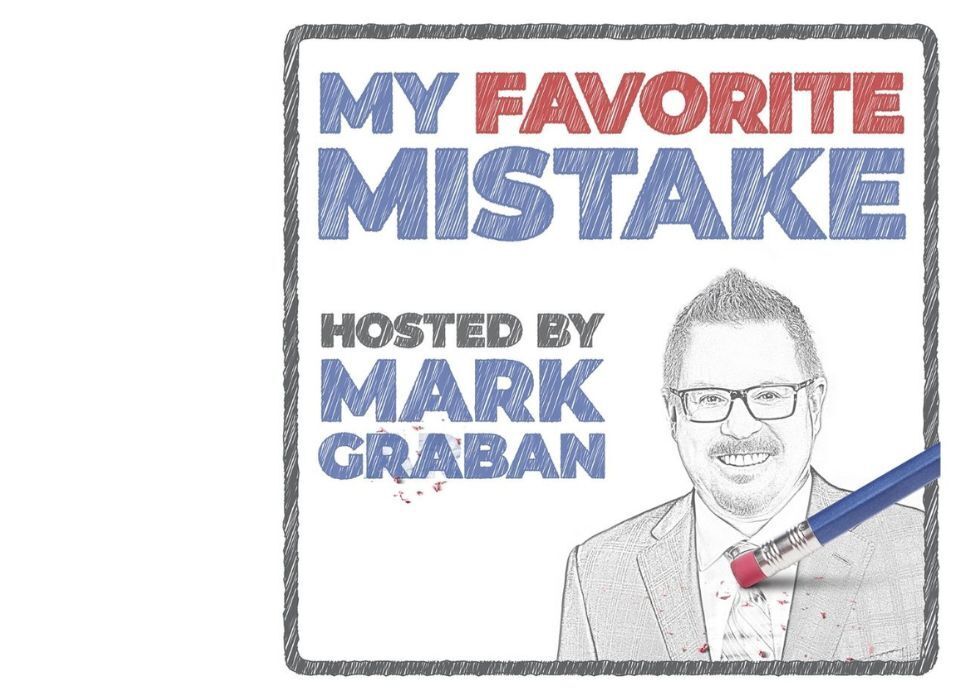
My Favorite Mistake is a podcast about learning without blame in business and leadership.
Despite the name, it’s not just my favorite mistake—it’s yours, it’s ours, and it’s what we can all learn from when things don’t go as planned.
Hosted by author and consultant Mark Graban, each episode features honest conversations with leaders, executives, entrepreneurs, and changemakers about a meaningful mistake they made—and what they learned after things went wrong. How they responded. How they improved. How they grew as leaders.
This isn’t a show about failure theater, gotcha moments, or simplistic “lessons learned.” It’s about how real people reflect, improve, and lead better in complex organizations—without scapegoating, shame, or hindsight bias.
What You’ll Hear
• Leadership and management mistakes that reshaped careers, teams, and organizations
• How teams and leaders learn without blaming individuals
• Insights about culture, systems, decision-making, and psychological safety
• Practical lessons drawn from real experience, not abstract theory
Guests come from business, healthcare, technology, sports, entertainment, government, and academia, sharing stories that reveal how learning actually happens.
The Perspective
Mark brings a systems-thinking lens grounded in Lean management, continuous improvement, and psychological safety. The focus is less on who messed up and more on what the system taught us.
Who This Podcast Is For
• Leaders and managers who want to learn from mistakes without blame
• Executives working to build healthier, more resilient cultures
• Professionals who believe improvement starts with reflection, not punishment
My Favorite Mistake: Learning Without Blame in Business and Leadership
Listen on:










Episodes

7 days ago
7 days ago
Dr. Melisa Buie is an operational excellence leader and co-author of Faceplant: FREE Yourself from Failure's Funk. She has a PhD in nuclear engineering from the University of Michigan, taught graduate engineering courses at San Jose State University, and has worked at semiconductor and photonics companies including Lam Research, Coherent, and Applied Materials. She is also the author of Problem Solving for New Engineers.
Episode page with links, video, and more
Melisa's favorite mistake is one she didn't recognize until ten years after the fact. After publishing her first book while juggling a full-time job, teaching, and raising her son as a single parent, she was exhausted -- so she did nothing to market or promote it. She told herself she had earned the rest. What she actually did, she now sees, was choose invisibility. The lesson wasn't that rest is bad. It was that she had mis-timed it, treating rest as the finish line instead of part of the cycle.
In this conversation, Mark and Melisa get into why platitudes like "fail fast" and "fail forward" tend to fall flat, why pre-mortems can prevent faceplants that postmortems can't, and the four autopilot reactions Melisa calls the Conspirators -- the machine, the magician, the statue, and the satellite. They also explore how separating the facts of a failure from the story we tell ourselves about it is often the difference between getting stuck and getting free, what happens when organizations inadvertently create cultures where failure isn't safe, and how AI can be a thinking partner in problem solving rather than a replacement.

Monday Apr 20, 2026
Monday Apr 20, 2026
At 24 years old, Joel Steele was buried in what would be roughly $800,000 of debt in today's dollars - the wreckage of a healthy fast food restaurant chain he had poured himself into since college. He had three locations, media coverage, and a fourth lease in his hand. What he didn't have was a team, a mentor, or a profit.
Episode page with links, video, and more
In this conversation with Mark Graban on My Favorite Mistake, Joel takes apart what actually went wrong. It wasn't the concept - healthy fast food was ahead of its time. It was that he had set the wrong metric. He was measuring growth instead of profitability. He was doing every job himself. And when warning signs appeared (literally, as sewage backing up four feet high in the middle of a lunch rush), he kept going.
Joel shares the moment he finally took off the blinders, the catatonic stretch that followed, and how he rebuilt - first into a successful financial services firm, and now as the author of Life Switch: How to Experience the Power of Living On. He explains what it means to live "on" versus "off," why he designed a $1 million charitable commitment into the book itself, and what he tells high achievers - including pro athletes - who are trying to figure out what comes next.
A thoughtful conversation about founder blinders, the trap of confusing growth with success, and the psychology of coming back after a public failure.

Monday Apr 13, 2026
Monday Apr 13, 2026
Irna Hutabarat Athans had an MBA from MIT, connections to VCs, and a front-row seat to the startup world. But technology felt soulless to her, so she walked away -- for years. She became a tango dancer, a poet, a world traveler. Anything but tech.
Episode page with links, video, and more
That decision cost her years of income and impact. The turning point came at a conference where she asked a room full of hotel and restaurant entrepreneurs what would happen to the families whose jobs AI would eliminate. Most couldn't answer. But one woman told her, "The fact that you asked that question is the very reason you have to lean into AI -- because AI is now driven by people who do not ask those questions."
From there, Irna started using AI not as a search engine but as a thinking partner. She applied chain of thought reasoning to surface limiting beliefs she had carried for years -- about money, about success, about whether someone who loves Greek tragedies belongs in technology. Through those conversations, she arrived at a personal mission: to be a creator, creating something she enjoys, that people will pay for, and that makes the world a better place.
We also talk about what blockchain actually is beyond crypto, why only 6.4% of blockchain VC goes to women-led companies, and why AI, blockchain, and quantum computing need more diverse voices building them.

Monday Apr 06, 2026
Monday Apr 06, 2026
Andy Freed has seen Bruce Springsteen perform 95 times. Somewhere along the way, he stopped just enjoying the shows and started studying them -- how Springsteen prepares a set list, reads an audience, paces energy across a four-hour performance, and makes every musician on stage feel like the most important person in the room.
Episode page with links, video, and more
Andy is CEO of Virtual Inc. and author of Lead Like the Boss: The Bruce Springsteen Framework to Elevating Your Leadership. His favorite mistake goes back to 2006, when his team created an Uncle Sam-style "We Want You" marketing campaign for a global organization -- then got a call from their Japanese partner pointing out that American World War II propaganda doesn't exactly resonate in Tokyo. The campaign was already far along, forcing a sharp pivot and a lasting lesson about what happens when you view your audience through a single cultural lens.
From there, we dig into the ideas at the heart of his book: why communication isn't just a leadership skill but is leadership itself, the "think, feel, do" framework for making sure your message actually lands, and why a well-intentioned company cafeteria policy once drove employees to quit. Andy also shares why Tom Peters was right that leadership is a performance, how self-awareness matters more than fixing every weakness, and what it means when Springsteen shakes every band member's hand at the end of every show.

Monday Mar 30, 2026
Monday Mar 30, 2026
Dr. Julia Garcia -- psychologist, author, and host of The Journey with Dr. J -- built two businesses that didn't survive.
Episode page with links, video, and more
The first was a performing arts collective that grew to 20 people before the economics collapsed. The second was a mental health app for young girls experiencing harassment on social media -- grant-funded, scrappy, and gaining real traction -- until a cross-country move, a young son, no childcare, and an eroded sense of self-worth made it impossible to continue. She never set up a single investor meeting. That one, she says, was the hardest to recover from.
What she learned from both failures shaped her book, The Five Habits of Hope -- and a sharp distinction she draws between hope and resilience. Resilience, as she sees it, has been co-opted by a push-past-it culture that encourages people to power through without addressing root causes. Hope is different. It's a cognitive science with measurable predictors of success: more collaboration, better problem-solving, greater willingness to adapt. Hopeful teams outperform resilient ones -- and leaders who build emotionally safe environments are the reason people stay.
Dr. Garcia also turns the tables mid-episode, walking host Mark Graban through a live coaching exercise on honesty, self-worth, and the feelings we suppress instead of process. It's one of the more candid moments the show has had.

Monday Mar 23, 2026
Monday Mar 23, 2026
Mike Chaput bought his first company at 24, went bankrupt at 28, and started over. When he co-founded Endsight, he and his partners worked hard to establish company values -- and landed on one that sounded great: "Have a sense of humor and take enjoyment from the day." The problem? Elevating humor to the top of the values hierarchy gave permission for blame-based behaviors, including a rubber chicken shaming ritual where the chicken got hung on the cubicle of anyone who made a mistake.
Episode page with video, transcript, links and more
The turning point came when Mike encountered W. Edwards Deming's work at UC Berkeley's Haas School of Business and a sales leader told him bluntly that the organization felt like it was always looking for someone to blame. Deming's Point 8 -- drive fear out of the workplace -- made it clear: humor without respect underneath it creates the conditions for people to hide problems from leadership.
Mike shares the framework he now uses to test whether values are actually working, how Endsight replaced blame with problem registers, value stream managers, and A3 thinking, and why command-and-control leadership turns teams into panicked prey animals instead of coordinated predators. Drawing on Primed to Perform by Doshi and McGregor, he explains the motive spectrum from play to inertia -- and why fear-based management guarantees low performance.

Monday Mar 16, 2026
Monday Mar 16, 2026
Kendall Berg was the most productive person on every team she joined. She was so technically good at her job that she thought she didn't have to be nice. Then a VP she respected -- someone outside her chain of command -- pulled her aside and delivered six words that changed her career: "Nobody likes working with you."
Episode page with links, video, and more
That blunt feedback could have been a setback. Instead, it became the catalyst for a complete transformation. Kendall spent a year building structured templates for the soft skills nobody had ever taught her -- how to make small talk, how to disagree without being dismissive, how to advocate for her own work -- and went from stuck at the manager level to earning five promotions in six years.
In this episode, Kendall shares her favorite mistake and what she learned about the real reasons people get promoted (and don't). We talk about why "playing politics" deserves a reframe, why nobody actually wants to work in a true meritocracy, and the "acknowledge and respond" technique that changes how people receive your ideas. She also shares how she turned a team of 17 underperformers into high performers by giving them something most managers never provide: structure for soft skills.
Kendall Berg is an internationally published author, TEDx speaker, and career coach. Her book is Secrets of the Career Game: 36 Strategies to Get Ahead In Your Career. Her TEDx talk is The Clash of the Generations. Find her at ThatCareerCoach.net.

Monday Mar 09, 2026
Monday Mar 09, 2026
Patrick Engasser spent two years ranked near the bottom of a 615-person sales organization -- broke, in debt, and grinding through trial and error -- before one decision changed everything. He hired a coach. The problem wasn't effort or talent. It was not knowing that was even an option.
Episode page with links and more
In this episode, Patrick shares the mindset shift that had to happen before any strategy could work, how he turned blindness from a perceived liability into a genuine competitive advantage, and what actually separates leaders people want to follow from managers who just have a title.
What you'll learn:
Why trial and error is the most expensive way to learn -- and what to do instead
How mindset has to come before strategy in any coaching relationship
What real leaders do differently when things go wrong
How to coach people through excuses without damaging the relationship
What procrastination is really telling you -- and how to interrupt it
What to do (and not do) when you encounter a guide dog in public
Patrick Engasser is the bestselling author of "If I Can Do It, You Can Do It" and a business coach and motivational speaker who built a seven-figure sales team after starting from zero.

Monday Mar 02, 2026
Monday Mar 02, 2026
Dr. Jen Fry's favorite mistake is a disagreement with her best friend of over ten years -- a small miscommunication that led to eight months of silence. Neither of them knew how to reconcile it. Then Jen's mother passed away, and her friend sent a card. That single act of reaching out changed how Jen thinks about conflict, reconciliation, and the kind of people worth keeping in her life.
Episode page with transcript, links, and more
Jen is a sports geographer, tech founder, TEDx speaker, and author of I Said No: A No-Nonsense Guide to Setting Boundaries, Speaking Up, and Having a Backbone Without Being a Jerk. In this conversation, she draws on her background as a college volleyball coach, tech founder, and conflict expert to break down what leaders and teams get wrong about conflict, feedback, and boundaries.
We dig into why niceness gets weaponized to keep people quiet, why kindness requires accountability, and why people pleasing quietly ruins reputations and results. Jen explains why conflict-avoidant bosses create conflict-avoidant cultures, why anonymous feedback does more harm than good, and the critical difference between being defensive and defending yourself. She also shares what she saw on a high school volleyball video that she wishes she could burn -- and what it taught her about being a better teammate and leader.

Thursday Feb 26, 2026
Thursday Feb 26, 2026
Baseball has always made room for human error. Umpires miss calls. Fans complain. Life goes on.
But this season, MLB is rolling out the Automated Ball-Strike challenge system -- ABS -- giving teams two challenges per game to contest ball-and-strike calls.
The idea is to reduce bad calls. The likely side effect is a whole new category of mistakes.
In this "Mistake of the Week," Mark Graban looks at what happens when correcting human error depends on another human decision -- and what one anonymous coach predicted, vividly, about how this will play out.
About Mark Graban
Mark Graban is an author, speaker, and consultant, whose latest book, The Mistakes That Make Us: Cultivating a Culture of Learning and Innovation, is available now.
He is also the author of the award-winning book Lean Hospitals: Improving Quality, Patient Safety, and Employee Engagement and others, including Measures of Success: React Less, Lead Better, Improve More.
He serves as a consultant through his company, Constancy, Inc, and is also a Senior Advisor for the technology company KaiNexus.
Mark hosts podcasts, including “Lean Blog Interviews” and “My Favorite Mistake.”
Education: B.S. in Industrial Engineering from Northwestern University; M.S. in Mechanical Engineering, and M.B.A. from the Massachusetts Institute of Technology’s Leaders for Global Operations Program.